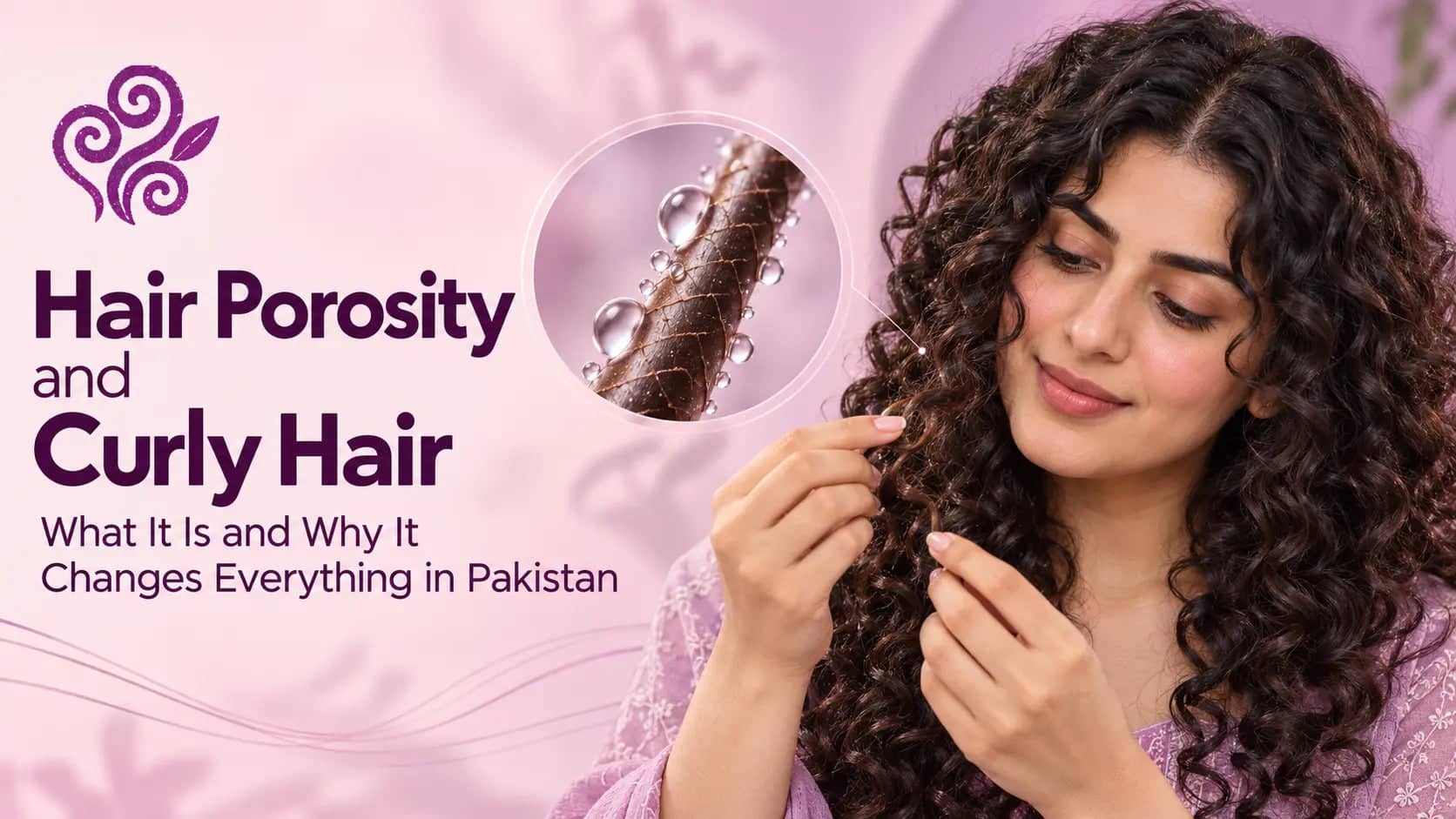
Hair porosity is the most useful thing you can know about your curls. It tells you how well your hair absorbs moisture, how fast it loses it, and which products will actually work for you versus which ones will sit on the surface doing nothing. Most curl routines ignore porosity entirely and hand out the same advice to everyone. That's why so many people follow the right steps and still don't see results. This guide explains what porosity is, how to test it at home in five minutes, and what it means for managing curly hair specifically in Pakistan. If you haven't built your curl routine yet, start with the Curly Girl Method beginner's guide first.
What Hair Porosity Actually Means
Every hair strand is wrapped in layers of overlapping scales called the cuticle. Porosity describes how tightly those scales sit together. When they're closed and flat, moisture and products struggle to get in but stay in well once they do. When they're lifted or damaged, moisture enters fast but also escapes fast.
| Low Porosity : Cuticle sits tightly closed | Moisture and products resist entry. Hair takes long to get wet and long to dry. Products build up on the surface easily. |
|---|---|
| Normal Porosity : Cuticle sits in balance | Absorbs moisture at a consistent rate and holds it without much effort. Responds well to standard curl routines. |
| High Porosity : Cuticle is lifted or damaged | Absorbs moisture and product almost immediately but loses both just as quickly. Frizz and dryness are persistent. |
Genetics determines your baseline porosity, but it can shift toward high porosity through heat damage, chemical treatments, hard water exposure and sun damage. All four of these are regular occurrences for curly hair in Pakistan.
How to Test Your Hair Porosity at Home
The Float Test
Take a few strands of clean, product-free hair and place them in a glass of room-temperature water. Wait two to four minutes without touching.
- Float near top → Low porosity
- Float in middle → Normal porosity
- Sink quickly → High porosity
For accurate results, use strands taken right after a clarifying wash before applying any products.
The Spray Test
Mist a small section of clean, dry hair with water. Watch how the droplets behave on the strand.
- Beads and sits 10+ seconds → Low porosity
- Absorbs within a few seconds → Normal to high
- Absorbed almost instantly → High porosity
Run this test on clean, dry hair with no product residue on it.
Low Porosity Curly Hair in Pakistan
What It Looks and Feels Like
Low porosity hair often looks shiny because the flat, closed cuticle reflects light well. It takes a long time to get fully wet in the shower and a long time to air-dry. Products don't absorb easily and tend to sit on top of the hair instead, which leads to buildup faster than other curl types. Hair might feel well-moisturized right after washing but become dry again by the next day.
What Low Porosity Hair Needs
The cuticle needs to be open before anything can get in. Heat is the most reliable way to do that.
- Always use heat when deep conditioning: a warm towel over a shower cap, a hooded dryer, or a steam treatment
- Apply products immediately after rinsing on soaking wet hair. The cuticle is slightly more open when hair is wet versus damp
- Use lightweight, water-based products. Heavy butters and thick oils sit on top of a closed cuticle and cause buildup instead of absorbing
- Clarify once a month minimum. Low porosity hair accumulates surface buildup faster than any other type
- In Pakistan's summer, the ambient heat actually helps. Apply leave-in and styling products immediately after stepping out of the shower to take advantage of the warmth
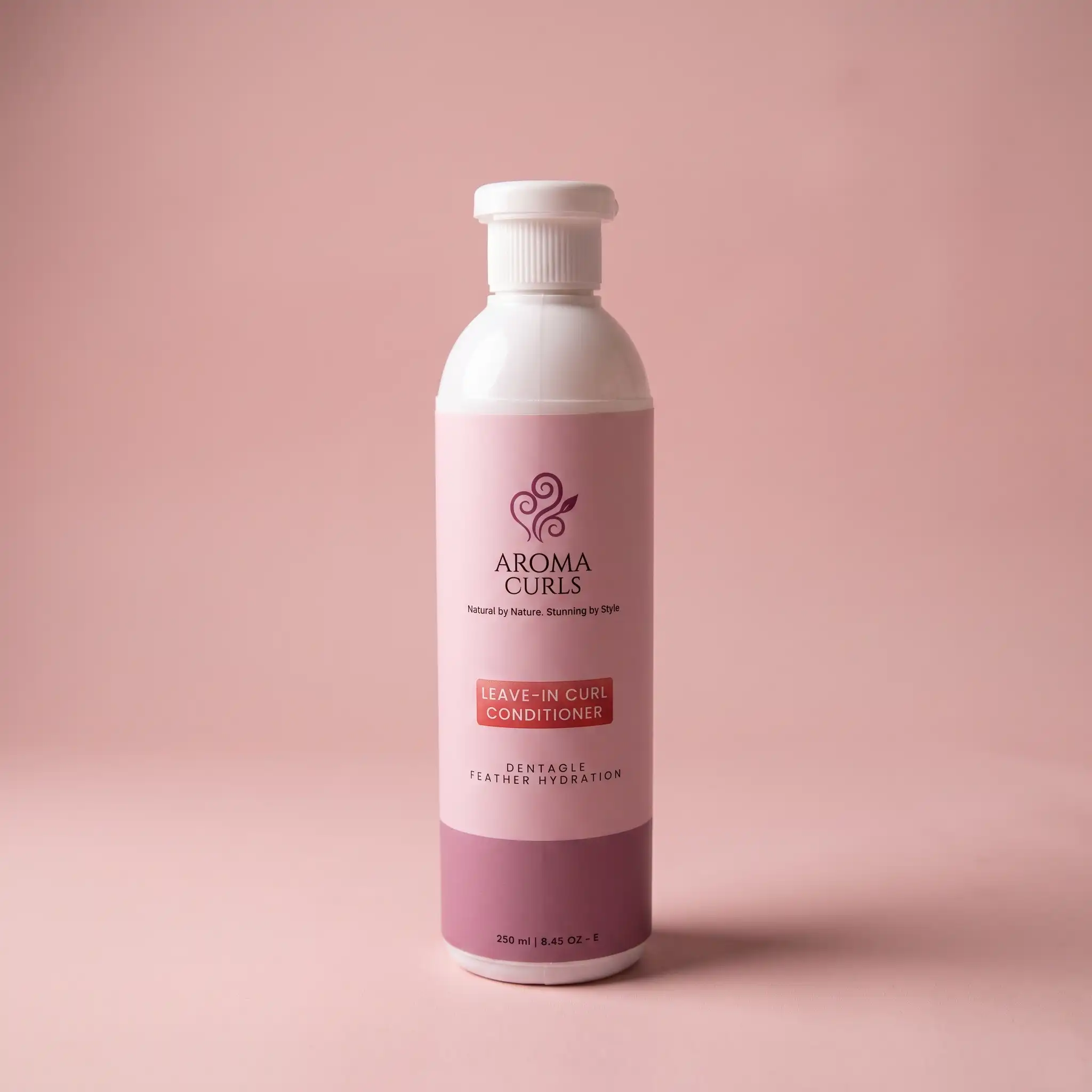
Aroma Curls Leave-In Curl Conditioner : Apply on soaking wet hair as the first layer. For low porosity hair, apply right out of the shower while the cuticle is still open from the warm water and work it through each section slowly.
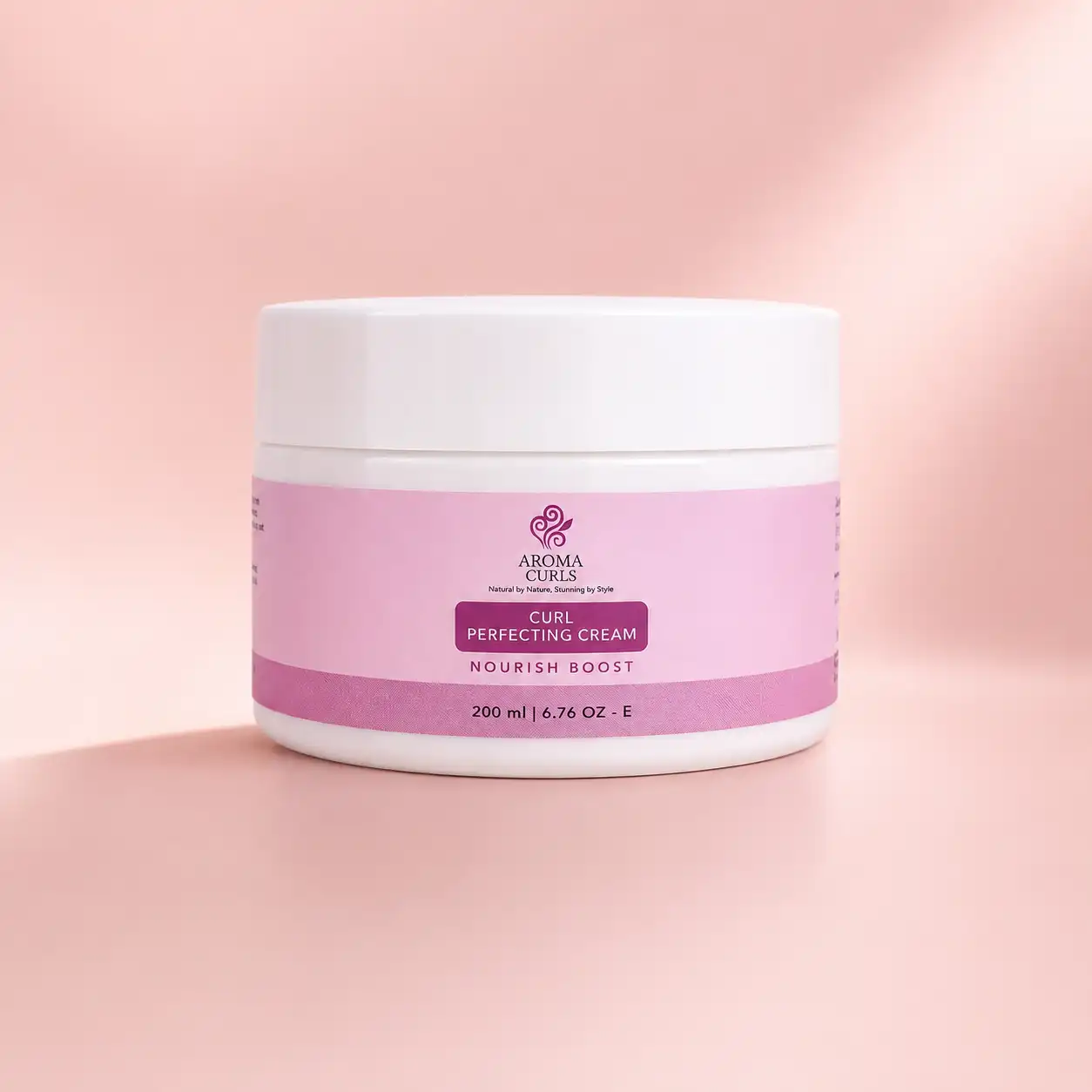
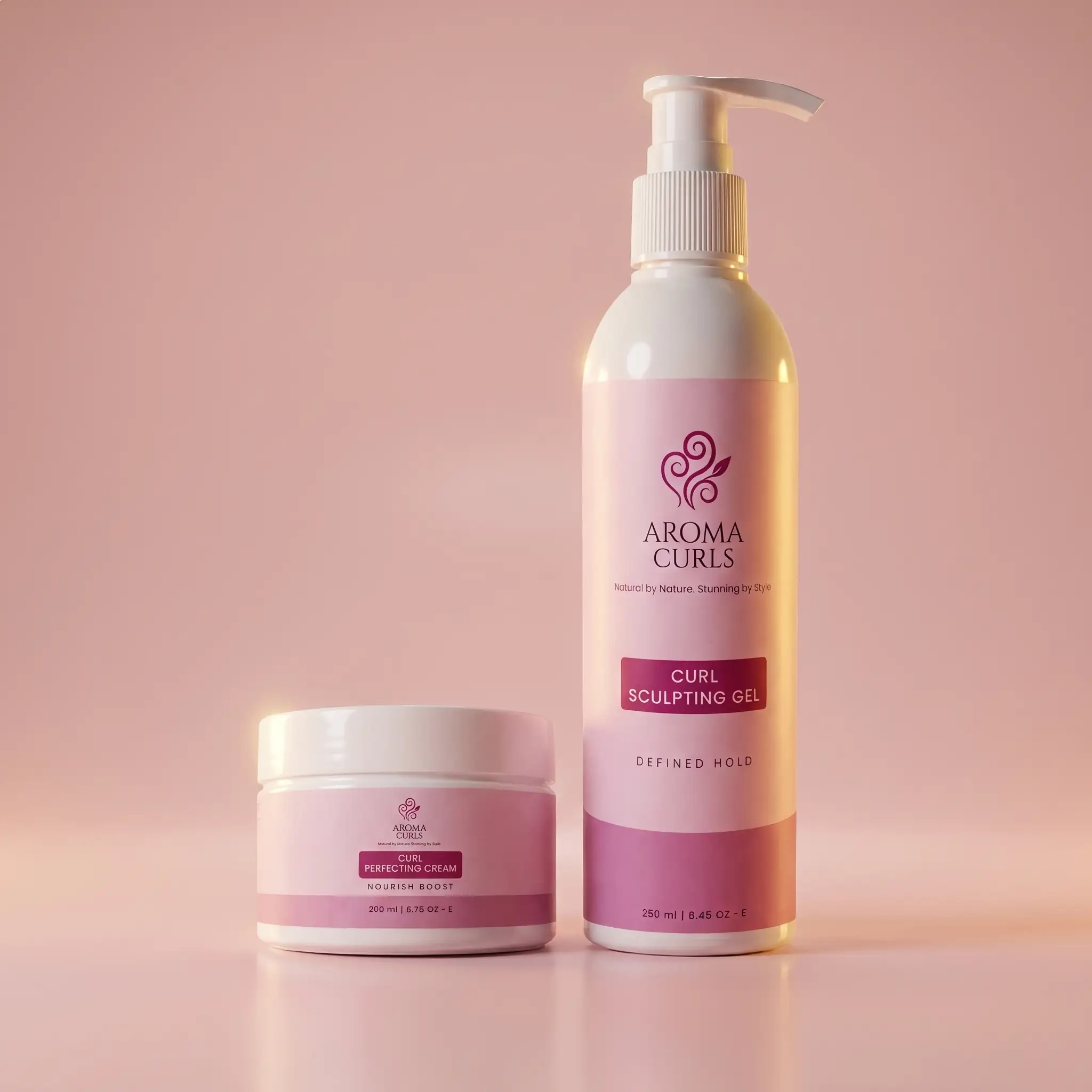
Aroma Curls Curl Perfecting Cream : Lightweight enough to absorb into low porosity strands when applied on soaking wet hair immediately after leave-in, while the cuticle is still open from washing.
Aroma Curls Curl Sculpting Gel : Water-based hold that doesn't add to the buildup problem low porosity hair is prone to. Seals definition without a heavy coating on the strand.
High Porosity Curly Hair in Pakistan
What It Looks and Feels Like
High porosity hair absorbs water and product very quickly but loses both just as fast. It air-dries faster than other curl types, feels moisturized right after washing but goes dry within a few hours, and frizzes more easily in humidity because the open cuticle lets atmospheric moisture enter unevenly.
In Karachi during monsoon season, high porosity curls without a properly sealed gel layer can lose their definition within 20 minutes of stepping outside. High porosity is also the most common result of Pakistan's hard water. Mineral deposits from tap water gradually lift the cuticle with repeated exposure, even in people who had normal porosity originally.
What High Porosity Hair Needs
The goal is to keep moisture inside the strand after it's been absorbed.
- Use heavier leave-in conditioners and curl creams to compensate for how fast moisture leaves the strand
- Add a light protein treatment every two to three weeks to temporarily fill the gaps in the lifted cuticle
- Always rinse with cool water after washing and conditioning to close the cuticle as much as possible
- Follow the leave-in, cream and gel sequence every time without skipping. Each layer locks in the previous one
- Press a lightweight oil lightly over completely dry curls as a final step to seal the outermost surface
- In Pakistan's humid cities, skipping gel means frizz. High porosity curls need that sealed exterior more than any other type
Aroma Curls Leave-In Curl Conditioner : High porosity strands lose moisture fast, so a generous leave-in applied on soaking wet hair is the first layer of protection. Don't skimp on quantity here.
Aroma Curls Curl Perfecting Cream : Applied over the leave-in on wet hair to define curls and add a moisture layer that slows down how fast high porosity strands dry out.
Aroma Curls Curl Sculpting Gel : The final sealing layer for high porosity hair. Applied over the cream on wet hair, it locks moisture in and keeps Pakistan's humidity from breaking curl definition.
Normal Porosity Curly Hair
Normal porosity curls absorb moisture at a steady rate and hold it without a lot of extra work. Standard curl routines were written with this type in mind, which is why if a basic routine works consistently for you without needing adjustment, you're likely in the normal range.
The main focus for normal porosity is prevention: minimizing heat styling, addressing hard water buildup with monthly clarifying, and avoiding chemical over-processing that would push the hair toward high porosity over time.
Aroma Curls Curl Perfecting Cream : Normal porosity curls absorb and hold product well. Apply on soaking wet hair after leave-in to define the curl pattern before gel. This is where normal porosity gets the most visible results.
Aroma Curls Curl Sculpting Gel : Applied over the cream on wet hair to lock in moisture and protect against Pakistan's humidity. Even normal porosity curls benefit from a sealed exterior in Karachi or Lahore summers.
How Pakistan's Conditions Change Porosity Over Time
Porosity isn't fixed for life. These four factors, all common in Pakistan, gradually push hair toward higher porosity:
| Factor | How It Affects Porosity | What to Do |
|---|---|---|
| Hard water | Mineral deposits lift the cuticle with repeated exposure | Monthly clarifying wash |
| Sun exposure | UV breaks down the outer keratin layer | Cover hair outdoors during peak sun hours |
| Heat styling | Above 180°C damages cuticle structure permanently at contact points | Limit heat, use low settings |
| Chemical treatments | Rebonding, relaxing and bleaching force the cuticle open and leave it lifted | Deep condition weekly, use protein monthly |
Frequently Asked Questions
Can I have different porosity in different parts of my hair?
Yes, and this is very common in Pakistani hair that has been heat-styled, colour-treated or regularly exposed to sun at the ends. Roots are newer growth and tend to have lower porosity. Ends carry more accumulated damage and tend toward high porosity. If your roots feel fine but your ends are always dry, this is likely why. Use extra product at the ends and consider a trim on the most damaged sections.
Does Pakistan's hard water actually change my hair porosity?
It does, over time. Calcium and magnesium ions from hard water gradually lift the cuticle with repeated exposure, which is why many women in Pakistani cities find their hair has shifted toward high porosity even without any heat styling or chemical treatments. A monthly clarifying wash specifically formulated to remove mineral buildup is the most effective countermeasure.
My hair absorbs product immediately but still feels dry. What does that mean?
That's a classic sign of high porosity. The open cuticle pulls product in fast but can't hold onto it, so the moisture leaves just as quickly. Use heavier leave-in and cream products, add a protein treatment every two to three weeks to temporarily close the gaps in the cuticle, and always seal with gel on wet hair. If the dryness persists, add a weekly deep conditioning session with heat.
Can low porosity hair get enough moisture without using heat every time?
It can, but it takes longer and needs more product contact time. Apply leave-in on very wet hair and cover the sections with a shower cap for 10 to 15 minutes before styling instead of applying and moving on immediately. In Pakistan's summer, ambient warmth often provides enough heat on its own. The key is giving the product more contact time when you can't add direct heat.
Whether your curls are low or high porosity, the core of a good routine is the same: leave-in on wet hair, cream to define, gel to seal. Aroma Curls Curl Perfecting Cream and Curl Sculpting Gel are formulated for Pakistani conditions and work across all porosity types when applied correctly on soaking wet hair.