Curly hair has a unique structure that makes it more prone to dryness, frizz, and damage compared to straight hair. Because its shape is uneven, natural oils don’t reach the ends easily, and the wrong haircut especially cutting without considering the curl pattern can lead to weak ends and increased frizz. In Pakistan’s humid and hot cities like Karachi and Lahore, this issue becomes even worse due to moisture and heat affecting the hair cuticle. That’s why choosing a science-based haircut is essential for keeping curls healthy, defined, and manageable.
1. Understanding Curly Hair Structure
Curly hair behaves differently because its internal structure and external surface are not uniform. Each strand typically grows in an oval or slightly flattened shape, rather than a perfect circle like straight hair. This uneven geometry creates bends along the strand, which disrupts the smooth flow of natural scalp oils. As a result, moisture distribution becomes inconsistent the roots may feel hydrated while the mid-lengths and ends remain dry, increasing the risk of frizz and breakage.
Another key factor is the hair cuticle, the outer protective layer made up of overlapping cells. In curly hair, these cuticles tend to be naturally lifted instead of lying flat, especially at the bends of each curl. When the cuticle is raised, it allows moisture from the environment to enter and exit the hair shaft unpredictably. This leads to:
- Frizz (excess moisture absorption in humid conditions)
- Dryness (moisture loss in hot or dry environments)
- Weakened strands (higher susceptibility to damage)
This is where haircut techniques become critical. Blunt cutting methods, commonly used for straight hair, slice across curls without considering their natural pattern. When curls are cut this way:
- The curl grouping (clumps) gets disrupted
- Ends become uneven after shrinkage
- Hair strands rub against each other more → increased friction and frizz
Over time, this mechanical stress can weaken the hair fiber, contributing to split ends and long-term damage, not just surface-level frizz.
2. Haircuts That Scientifically Reduce Frizz
Choosing the right haircut for curly hair is not just about style it directly impacts moisture balance, curl formation, and long-term hair strength. The following techniques are widely recommended by curl specialists because they work with the natural structure of curls, reducing friction, uneven shrinkage, and damage.
Dry Cutting (Curl-by-Curl Technique)
Dry cutting is performed on hair in its natural, fully dry state, allowing each curl to be cut individually based on how it actually falls.
- Eliminates guesswork caused by shrinkage after drying
- Maintains natural curl pattern and alignment
- Reduces chances of uneven layers → less post-cut frizz
👉 Scientifically, this method respects the true length and tension of each curl, preventing structural imbalance that leads to frizz “explosion” after washing.
Layered Curly Cut (Internal Weight Removal)
Layering in curly hair is not about thinning it’s about strategic weight distribution.
- Removes excess bulk without breaking curl clumps
- Allows curls to bounce and form naturally
- Reduces internal pressure between strands → less friction
👉 When curls are not overcrowded, they don’t rub against each other as much, which directly reduces frizz and mechanical damage.
Deva Cut Method
The Deva Cut is a specialized technique where hair is cut curl-by-curl in a dry state, focusing on the individuality of each curl.
- Shapes every curl separately for maximum definition
- Prevents disruption of curl grouping
- Minimizes breakage by avoiding unnecessary tension
👉 This method is especially effective for people who want long-lasting curl definition with minimal frizz, as it aligns with the natural curl pattern instead of forcing structure.
Rounded Shape Cut (For Volume Balance)
A rounded shape haircut is designed to balance volume across the head, avoiding the common “triangle effect” (flat top, bulky ends).
- Distributes weight evenly from crown to ends
- Prevents bottom-heavy frizz buildup
- Creates a controlled, symmetrical curl flow
👉 Balanced weight = less stress on individual strands, which helps maintain curl health and reduces frizz caused by uneven density.
3. Haircuts That Cause Frizz & Damage
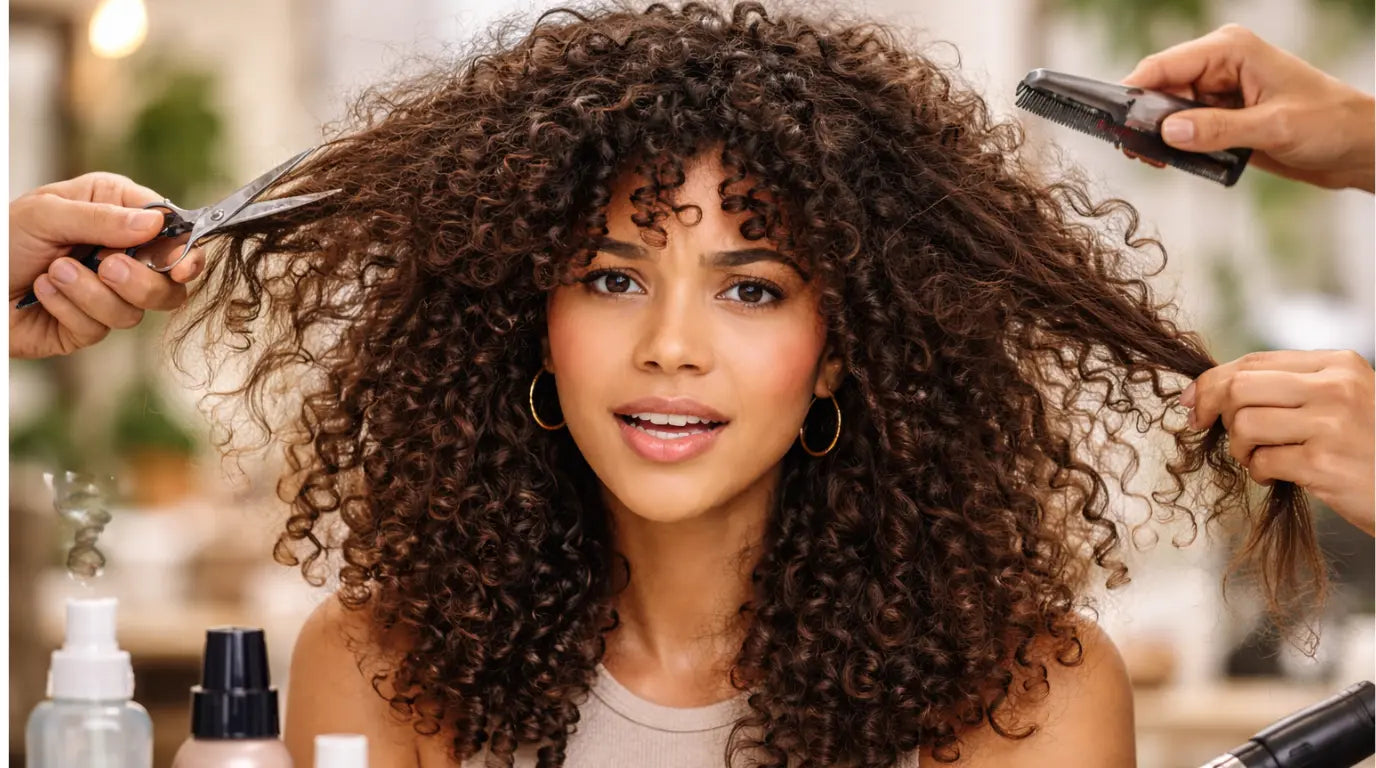
Not all haircut techniques are safe for curly hair. In fact, some commonly used salon methods can directly damage the hair structure, leading to long-term frizz, ضعف (weakness), and breakage. Understanding these risks is essential to protect hair health and avoid irreversible damage.
Razor Cutting
Razor cutting uses a blade instead of scissors, which creates a jagged, uneven edge on the hair strand.
- Disrupts the smooth cuticle layer
- Makes hair ends أكثر porous (absorb moisture unevenly)
- Leads to split ends, dryness, and سريع frizz buildup
Repeated razor cutting can weaken the hair shaft over time, making curls more prone to chronic breakage and thinning. For already dry curly hair, this method can accelerate damage significantly.
Straight Blunt Cuts
Blunt cuts are straight-line cuts typically designed for straight hair textures not curls.
- Ignore natural curl pattern and shrinkage
- Cause uneven layering once hair dries
- Create a “frizz halo” effect (puffy, undefined outer layer)
Forcing curls into a rigid shape increases strand tension and friction, which can lead to cuticle lifting, tangling, and eventual breakage.
Over-Thinning (Texturizing Shears Misuse)
Texturizing shears are often misused to “reduce volume,” but in curly hair, they can destroy curl integrity if not handled correctly.
- Removes essential internal structure of curls
- Creates weak, uneven strands
- Leads to loss of curl pattern + excessive frizz
Over-thinning reduces the hair’s natural strength, making it more vulnerable to breakage, split ends, and long-term thinning, especially when combined with heat styling or chemical treatments.
4. Climate-Based Haircut Strategy
Curly hair doesn’t react the same way in every environment. Climate directly affects the hair cuticle, which determines how much moisture your hair absorbs or loses. This means the same haircut can behave completely differently in Karachi vs Islamabad. A smart approach is to choose a haircut based on your climate zone, not just face shape or trends.
Humidity = Cuticle Swelling → Frizz Increase
In humid environments, the hair cuticle absorbs excess moisture from the air, causing it to swell and lift.
- Raised cuticle = rough surface → more friction
- Moisture imbalance → curls lose definition
- Results in instant frizz, puffiness, and shrinkage
👉 Scientific Insight: Curly hair already has a lifted cuticle humidity makes it worse, which is why haircut structure becomes critical.
Why Shorter Layers Work Better in Humid Cities (Karachi, Lahore)
In high-humidity cities like Karachi and Lahore, shorter and well-placed layers help control frizz.
- Reduce bulk → less moisture absorption
- Improve airflow between curls → faster drying
- Prevent “triangle shape” caused by bottom-heavy volume
👉 Result: Defined, lighter curls with controlled expansion, even in humid air.
5. Post-Haircut Care to Maintain Frizz-Free Curls
A great curly haircut can lose its effect quickly if post-hair cut care is ignored. Right after a cut, the hair ends are freshly exposed and more vulnerable, which makes moisture balance and handling even more important. The goal is simple: seal moisture, reduce friction, and avoid stress on the curl structure.
Importance of Moisture Sealing After Haircut
After a haircut, the cuticle at the ends is more exposed, making it easier for moisture to escape.
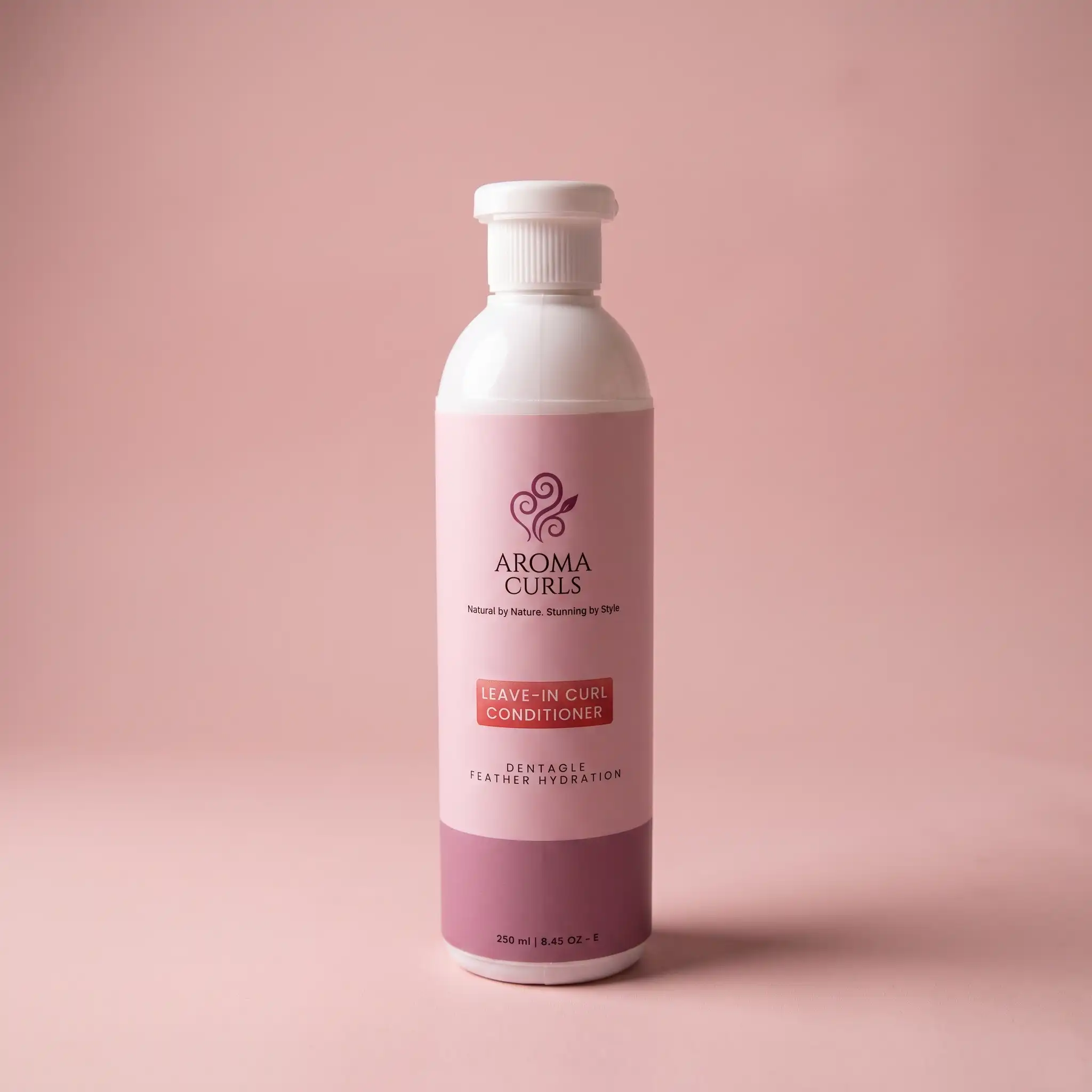
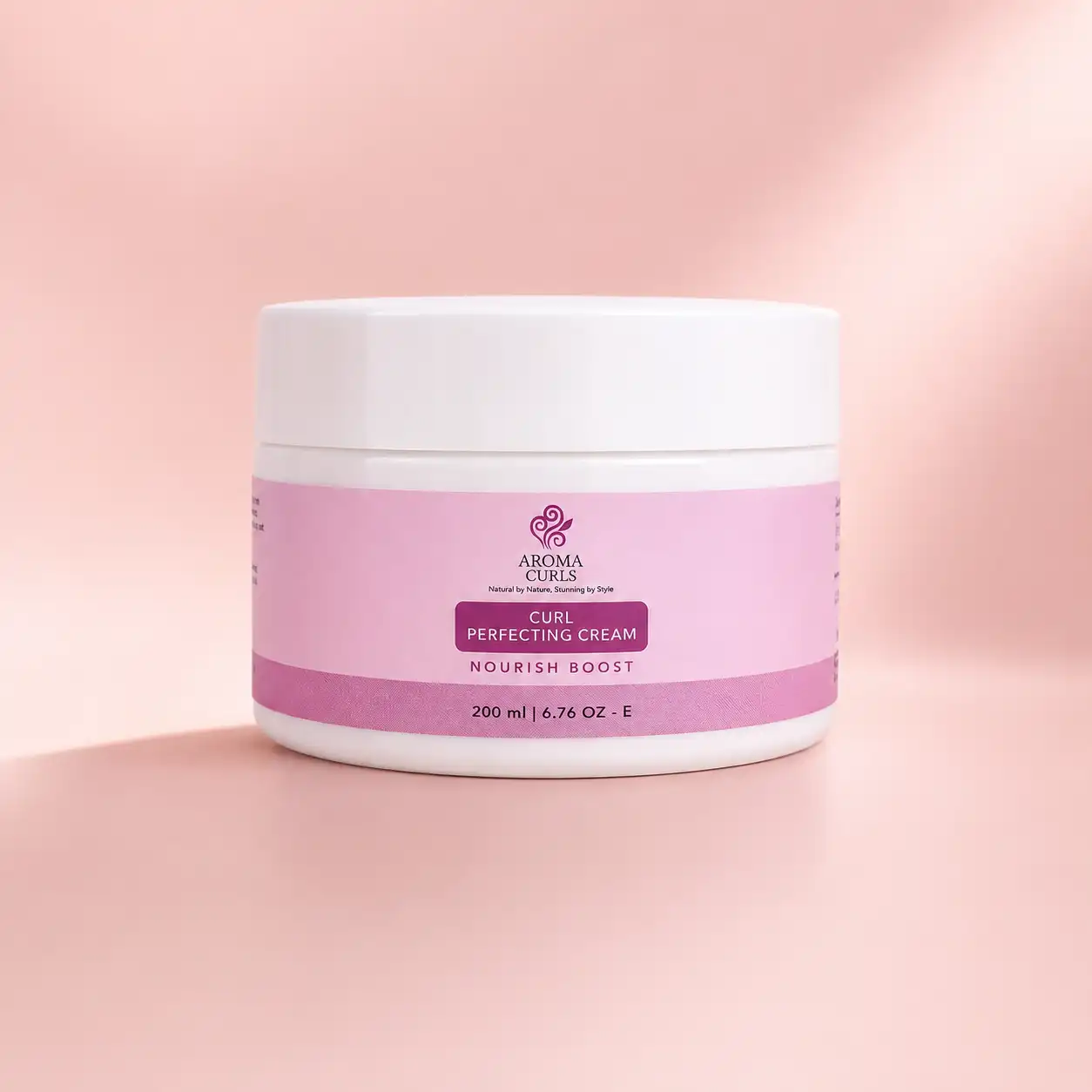
- Use a lightweight leave-in or curl-enhancing cream on freshly washed hair to lock in moisture and support curl definition from the start.
- Follow with a light oil (like argan or jojoba) to lock in hydration
- Focus on mid-lengths and ends where dryness starts
Well-hydrated curls have a smoother cuticle, which reduces frizz and prevents early split ends.
Avoid Heat Styling Immediately After Cut
Using heat tools right after a haircut can damage freshly cut ends.
- High temperatures lift and weaken the cuticle
- Reduces natural curl elasticity
- Can reverse the benefits of a precision haircut
Avoid heat styling for at least 3–5 days after a haircut to allow curls to settle naturally and maintain their structure.
6. Signs Your Haircut Is Damaging Your Curls
Right after a haircut, your curls should feel lighter, more defined, and easier to manage. If the opposite is happening, your haircut might be working against your curl structure instead of supporting it. Here’s a simple, user-friendly checklist to help you quickly identify the problem:
- Your hair gets more tangled than usual, especially at the ends
- Curls look uneven or lose their natural shape after drying
- You notice a puffy “frizz layer” on top instead of defined curls
- Ends feel rough, dry, or straw-like within a few days
- You see split ends appearing too quickly after the cut
- Hair feels lighter but weaker, lacking bounce or elasticity
- Styling products that used to work well now don’t give the same results
- Curls don’t “clump” together and instead look separated and messy
- You experience more breakage while detangling or styling
- Hair becomes harder to manage despite a fresh cut
👉 If you’re noticing multiple signs from this list, it’s a strong indication that the haircut technique didn’t suit your curl type. In that case, it’s better to consult a curl specialist early so the damage doesn’t get worse over time.
7. Expert Tips for Choosing the Right Stylist
Choosing the right stylist is just as important as choosing the right haircut. Curly hair requires specialized knowledge, and not every salon is trained to handle it correctly. Making the wrong choice here can lead to long-term frizz, uneven shaping, and damage.
| What to Check | Why It Matters |
|---|---|
| Ask if they cut curls dry or wet | A skilled stylist will explain that dry or curl-by-curl cutting helps maintain natural shape and reduces frizz |
| Review their curly hair portfolio | Look for real results like defined curls, balanced volume, and healthy ends not just styled or straightened images |
| Avoid salons treating curls like straight hair | Suggesting blunt cuts, heavy thinning, or razor use without explanation is a major red flag |
| Ask about experience with different curl types | Wavy, coily, and tight curls all need different techniques one method doesn’t fit all |
| Notice their consultation process | A good stylist asks about your routine, climate, and styling habits before cutting |
| Check for low-damage maintenance advice | Shows they care about long-term hair health, not just short-term appearance |
👉 A skilled curly hair stylist doesn’t just cut hair they work with your natural pattern, protect your hair health, and guide you toward better long-term results.
Conclusion
A great haircut is the foundation of healthy, frizz-free curls it shapes how your hair behaves every single day. Instead of following random trends, focus on understanding your curl type, environment, and the techniques that actually protect your hair from damage. Small informed decisions, like choosing the right stylist and haircut method, can make a huge difference in long-term hair health. Always go for a health-first haircut approach, because strong, defined curls start with the right cut not just the right products.
FAQs
Q: Which haircut is best for frizzy curly hair?
Layered cuts and dry curl-by-curl techniques work best as they maintain natural curl shape.
They reduce bulk, improve definition, and minimize frizz caused by uneven structure.
Q: How often should curly hair be trimmed?
Curly hair should be trimmed every 8–12 weeks to prevent split ends and maintain shape.
Regular trims help keep curls healthy without losing length unnecessarily.
Q: Can haircut alone reduce frizz?
A good haircut can reduce structural frizz by improving curl formation and balance.
However, proper care and moisture are still essential for long-term frizz control.
Q: Is layering good for damaged curls?
Yes, light layering can remove damaged ends and reduce stress on curls. But over-layering should be avoided as it can weaken already fragile hair.